
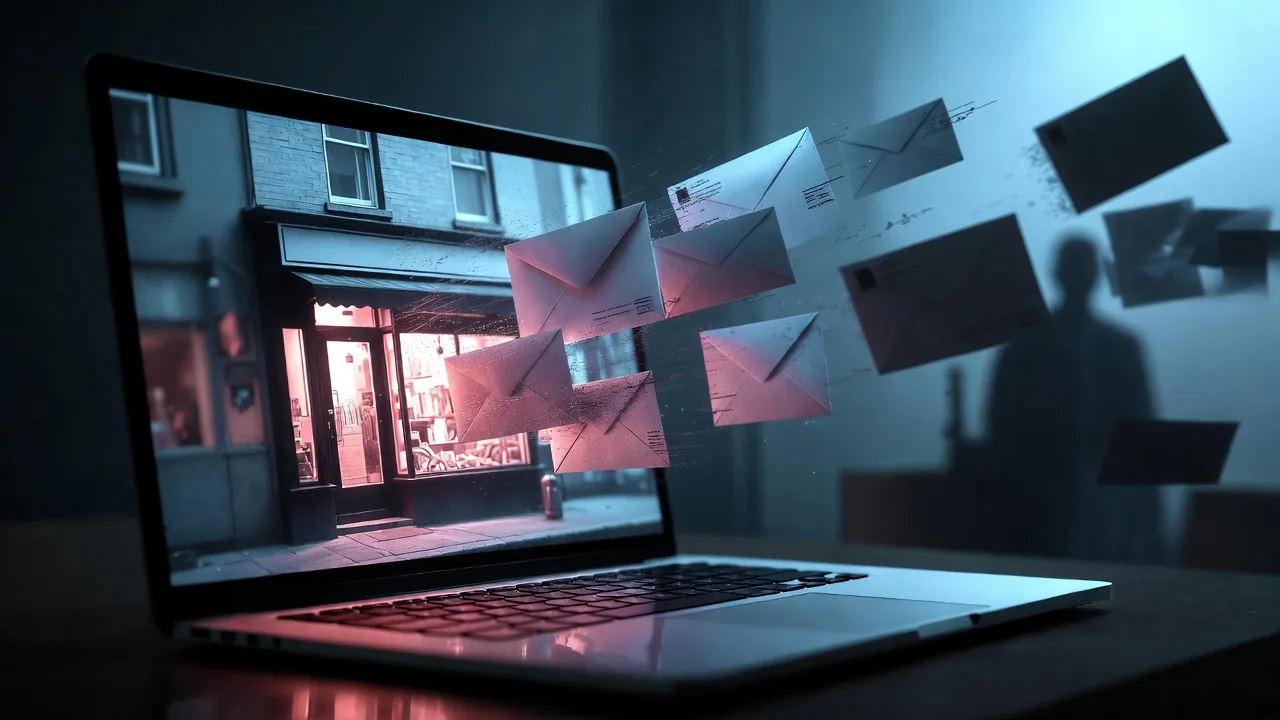
⚠️ Case Study: The Silent Impersonator — How One Local Service Business Lost Trust Forever to Fake Emails
Meet Jordan, owner of PeakView Window Cleaning, a trusted local service with a simple website: hours, service areas, a contact form, and glowing Google reviews. No online store. No checkout. Just a clean, professional site that booked 40–50 jobs a week through phone calls and emails.
One Tuesday, Jordan ran a free domain health scan. The verdict? Zero email protection.
No MX records. No SPF. No DKIM. No DMARC.
The report warned: “Your domain can be spoofed in seconds.”
Jordan shrugged.
“We don’t sell online. We don’t even have a payment form. Who would fake our emails?”
It felt logical. The site was just a digital business card. But that single assumption — “We’re too small to be a target” — became the crack that brought the whole reputation down.
Phase 1 — The Setup: A Domain Left Unlocked
Jordan’s domain had no mail server (MX) records and no sender verification (SPF/DKIM/DMARC).
That meant anyone could send email as peakviewwindowcleaning.com — no password, no trace.
Think of it like this: your company letterhead is sitting on a public printer in a busy mall. Anyone can walk up, type a message, slap your logo on it, and hit “send.”
And they did.
Phase 2 — The First Fake
Three weeks later, a customer called in a panic:
“Jordan, I got an email from you saying I won a free roof inspection — just click to claim. I entered my address and card for the ‘deposit.’ Did I mess up?”
The email looked perfect:
- From:
[email protected] - Subject: 🎉 Exclusive Offer: Free Roof Check (48hrs only!)
- Logo, colors, signature — all copied from the real site
- Link:
peakview-roof-promo.com/claim(a phishing clone)
The customer paid $99 to “secure the slot.” The money vanished.
The malware? Already on their laptop.
Within 48 hours, 17 more customers reported the same email.
Phase 3 — The Fallout: Trust in Freefall
Word spread fast.
- Google Reviews: 1-star posts — “Scammers using their name!”
- Neighborhood Facebook Group: “Avoid PeakView — they’re phishing now.”
- Phone stopped ringing: New leads assumed the business was shady
- Existing clients canceled: “We don’t feel safe giving our address anymore.”
Jordan spent $4,200 on:
- A forensic email expert
- Apology postcards to 400 past clients
- A new website with a “We Were Spoofed” banner
- Legal letters to Gmail/Yahoo demanding takedowns
But the damage was done.
“We didn’t lose money from the scam,” Jordan later said.
“We lost trust — and you can’t invoice that back.”
Phase 4 — The Slow Death
Even after adding SPF, DKIM, and DMARC (a 20-minute fix), the recovery took 9 months:
- Google still flagged old spoofed emails in search
- Local reputation stayed tainted
- Revenue dropped 62% year-over-year
- The business closed its doors 14 months later
The Lesson (Even If You Don’t Sell Online)
You don’t need a checkout to be impersonated. You just need a domain — and customers who trust it.
🚨 Don’t Be Jordan
You don’t need an online store to be impersonated. You just need a domain — and customers who trust it.
Fix it in 15 minutes:
- Add MX records (if you use Gmail, it’s 3 lines)
- Set up SPF (
v=spf1 include:_spf.google.com ~all) - Enable DKIM in Google Workspace
- Turn on DMARC (
v=DMARC1; p=quarantine)
Or let us do it for you — free domain email audit + full setup in 48hrs.
Lock it down before the fake email writes your obituary.
Your reputation isn’t optional.
Protect it.
Related Reading
-
Think You're Too Small to Get Hacked? Think Again.
Small local brands are prime phishing and impersonation targets — here's why. -
Your Small Site: The Unwitting Host for 2025's Fake Amazon Phishing Boom
Understand how attackers use your domain to power large-scale scams. -
Why Local Website Design Companies Can't Be Trusted With Your Security
Even a great-looking site can be insecure behind the scenes.