
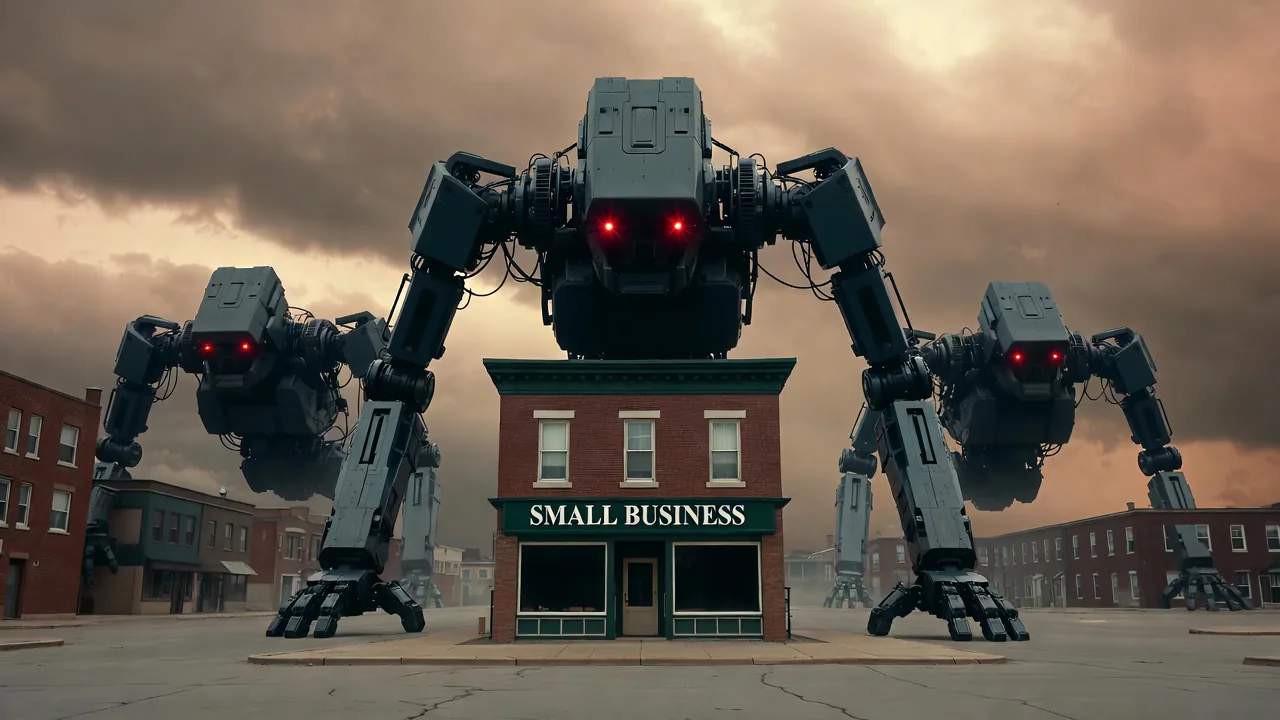
The Myth of “Too Small to Matter”
Most owners assume hackers go after banks, big retailers, or government sites.
In reality, attacks today are indiscriminate. In fact, 56% of small and medium-sized businesses (SMBs) faced at least one cyberattack in 2024 alone, and that trend has only accelerated in 2025. Automated scanners sweep the entire internet 24/7, looking for outdated plugins, weak passwords, and open admin pages.
If your site is online, it’s in the lottery — and bots don’t care who you are. They don’t Google your business name; they Google your version of WordPress.
Is your site’s outdated core or plugins showing up in those scans?
Your Site Is Valuable — Just Not in the Way You Think
Even a simple website has something worth stealing. Hackers don’t want your logo or blog posts — they want your server’s resources:
-
To host spam or phishing pages that impersonate banks or shipping companies—like the 2025 surge in fake Amazon login pages hosted on compromised mom-and-pop e-commerce sites.
-
To send fake emails using your domain name, ruining your sender reputation overnight.
-
To mine cryptocurrency using your server’s CPU, spiking your hosting bills without warning.
-
To redirect your visitors to scam stores or malware downloads, turning your traffic into their profit.
And when that happens, you’ll never get a message from the hacker — but you will get one from a confused customer or a hosting provider suspending your account.
With WordPress powering over 43% of websites, hackers scan for its 6,700+ new vulnerabilities reported in 2025 alone.
“If It Breaks, We’ll Just Fix It” — The Hidden Costs
The real cost of a hack isn’t the repair; it’s the fallout:
-
Search engine blacklists: Google flags your site as dangerous, wiping out your visibility overnight—costing SMBs an average of $4.44 million in breach recovery globally in 2025.
-
Email reputation loss: Once your domain sends spam, even legitimate messages land in junk folders.
-
Customer trust erosion: One security warning or phishing email is all it takes for clients to move on.
A hacked site cleans up fast, but a shattered reputation? That’s months of lost leads and trust to rebuild.
Why Small Businesses Get Hit Hardest
Large companies have security teams and cyber insurance.
Small businesses have neither — and that’s exactly why they’re targeted; they’re low-hanging fruit for bot networks.
It’s faster and cheaper to compromise a thousand small sites than one big one. Each becomes a tool in a larger network.
And because small business owners often don’t even notice the breach right away, the damage runs deeper before it’s caught.
| Large Businesses | Small Businesses |
|---|---|
| Dedicated security teams & insurance | Often DIY or none |
| High-profile targets (fewer but bigger hits) | 46% of all breaches hit |
| Quick detection via monitoring | Breaches go unnoticed for weeks |
Prevention Costs Less Than Recovery
Security isn’t about paranoia — it’s about protection, uptime, and credibility.
Even one layer of defense — automated backups, timely updates, and real monitoring — can stop most automated threats.
Again, it’s not about being important. It’s about being online — and that’s all the reason hackers need.
Hackers don’t care how big you are — only how easy you are.
Next Step: Know Where You Stand
Want to know if your site’s already exposed?
In under 5 minutes, our free security check reveals if your site’s a sitting duck—get instant recommendations to lock it down. Start before bots do.
Sources: Stats sourced from IBM Cost of a Data Breach Report 2025, Heimdal Security, StrongDM, and Patchstack Vulnerability Database. For full details, visit the linked reports.
Related Reading
-
The Rise of Automated Attacks: Why Small Businesses Are Prime Targets
Dive into real-world examples of bot-driven hacks overwhelming unprepared sites. -
Outdated Plugins: The Weak Link in Your Website's Security
Explore how neglected plugins open doors to 90% of WordPress exploits. -
Case Study: The Overlooked Warning — How One Small Business Ignored Security Headers and Lost Everything
A cautionary tale of one site's quick fix turning into a total shutdown.