
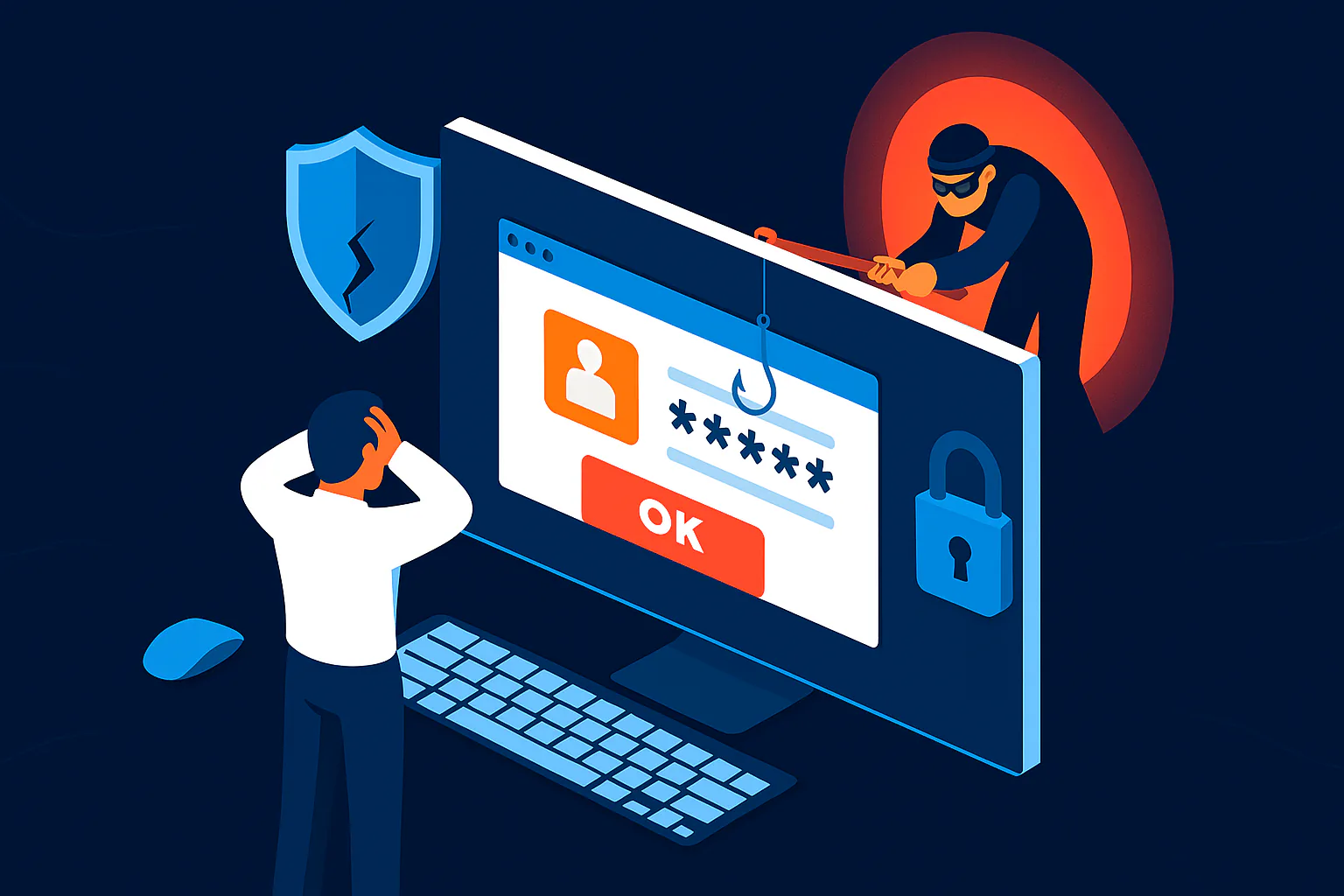
The Sneaky Takeover: When Your Site Becomes a Phishing Front
Imagine logging into what looks like Amazon—only to hand over your credentials to a hacker hiding behind a small bakery’s website.
That’s not sci-fi; it’s the reality of 2025’s phishing explosion. Cybercriminals aren’t building their own sites from scratch anymore. Instead, they’re hijacking unprotected small business platforms to host fake login pages mimicking banks, Amazon, or UPS.
Why target you?
Because small business sites—often running outdated WordPress or WooCommerce—offer credible domains, low scrutiny, and easy access. Once compromised, they quietly serve fake pages while your real content keeps running in the background — fooling both visitors and search engines.
The result?
The result: over 120,000 fake Amazon pages detected in 2025, many hosted on legitimate small-business domains.
The 2025 Surge: Prime Day Fuels the Phishing Frenzy
2025 saw phishing kits evolve into a full-blown epidemic, with hackers dropping ready-made scam templates onto breached servers like digital graffiti.
Around Amazon’s July Prime Day, NordVPN spotted 120,000 bogus sites popping up—many designed as pixel-perfect Amazon login knockoffs to snag credentials during deal-hunting chaos. By October’s Big Deal Days, Check Point tallied another 92,000 phishing domains, plus 21,000 laced with malware downloads.
And the small site angle? Reports highlight a 50% jump in dark web phishing kits, enabling attackers to quickly repurpose vulnerable websites. These aren’t flashy corporate breaches; they’re quiet invasions of local business websites, turning your “About Us” page into a gateway for fraud.
-
Fake Amazon Logins: Users click a “Prime Deal Alert” email, land on your hacked site disguised as amazon-prime-login.com (but hosted on your bakery.com/subfolder), and boom—credentials stolen.
-
Shipping Scams: Impersonating FedEx or UPS with “delayed package” hooks, luring clicks to credential-harvesting forms buried in your site’s code.
-
Bank Mimics: Wells Fargo or Chase alerts routed through your compromised domain, blending legitimacy with theft.
Small businesses got hit hardest: They face the highest rate of malicious emails (1 in 323), priming them as ideal hosts for these operations.
How Hackers Pull It Off: A Quick Compromise Blueprint
It starts simple—too simple for most small owners to spot:
-
Scan and Strike: Bots probe thousands of sites daily for weak spots like outdated theme files or default admin logins. In 2025, 80% of phishing attacks leveraged AI-generated lures to first breach the host site.
-
Silent Upload: Once in, hackers inject phishing kits—pre-built HTML/CSS clones of Amazon’s login—into hidden directories. Your homepage stays intact; the scam lives in a folder you probably don’t even know exists.
-
Traffic Redirect: Malicious emails or ads point victims to these subpages, using your domain’s trust (e.g., freshbread.com/amazon-login) to evade filters.
-
Cash Out and Ghost: Stolen logins sold on dark markets; the kit self-deletes or goes dormant until the next wave.
The kicker? 57% of organizations reported daily or weekly phishing attempts in 2025, but small sites often fly under the radar for weeks.
The Ripple Effect: Why This Hits Small Businesses Double-Hard
Sure, the hacker profits—but you’re left holding the bag.
-
Reputation Ruin: Google blacklists your domain for malware hosting, tanking SEO and customer trust overnight. Rebuilding? Expect months of lost sales.
-
Legal and Financial Hits: If victims sue or regulators knock (hello, FTC fines for phishing facilitation), costs skyrocket—phishing breaches averaged $4.88 million in damages this year.
-
Operational Chaos: Hosting suspensions, email deliverability craters, and frantic cleanups divert you from running your business.
In a year where 3.4 billion phishing emails flew daily, small e-com sites became prime real estate for these scams.
| Tactic | Small Site Risk | Real 2025 Impact |
|---|---|---|
| Fake Logins | Easy domain trust | 120K+ Amazon clones detected |
| Email Redirects | Hidden iframes | 92K phishing domains active |
| Malware Drops | Plugin exploits | 21K sites with payloads |
Lock It Down: Prevention That Packs a Punch
You don’t need a Fortune 500 budget to evict these squatters. Start with these 2025-proof steps:
-
Patch Religiously: Update WordPress, themes, and plugins weekly—80% of breaches stem from known vulns. For bloggers, prioritize theme files to block footer injections; service pros, lock down contact form plugins against lead theft.
-
Harden Access: Enforce 2FA on all logins and use security plugins to scan for injected code.
-
Monitor the Shadows: Set up file integrity checks and alerts for unusual uploads. Watch image optimizers for malware in galleries; event organizers, scan calendar plugins for fake listings.
-
Domain Vigilance: Regularly audit subdirectories and use .htaccess to block suspicious redirects.
Pro tip: Let us handle all this for you—our managed security service automates patches, scans, and monitoring, catching threats like the 57.5% spike in early 2025 phishing kits before they land.
Your site isn’t just a storefront—it’s a potential phishing pawn. Secure it before hackers move in.
Take Control: Scan Your Site Today
Don’t wait for a victim complaint to discover the breach. Request a free security scan and we’ll check your site for hidden kits, weak spots, and scam signals—in minutes, with zero hassle.
Sources: Stats sourced from NordVPN Threat Report, Check Point Research, Hoxhunt Phishing Trends, Varonis Cybersecurity Stats, Astra Security Phishing Stats, and StrongDM Small Biz Stats. For full details, visit the linked reports.
Related Reading
-
Case Study: The Silent Impersonator — How One Local Business Lost Trust to Fake Emails
Email impersonation scams are closer to home than you think. -
Think You're Too Small to Get Hacked? Think Again.
Attackers exploit small business trust to run global scams. -
AI Is Supercharging Hackers — Here's Why Your Website Is at Risk
How AI-generated phishing campaigns are scaling faster than ever.